
By: Chris ⎜ Last updated
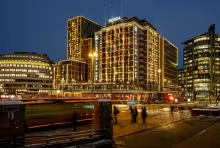






Grünerløkka is where Oslo locals eats, drinks and browses independent boutiques. There are plenty of cafes, restaurants, bars, some of the best coffee shops in Oslo. It´s located just east of the Akerselva river, about a 15-minute walk from the city centre or a short ride on tram 11 or 12. Get off at Schuss plass to start at the southern end, or Birkelunden if you want to start at the quieter northern end.
Thorvald Meyers gate runs north-south through the centre of the neighbourhood and most of what you're looking for is either on this street or Markveien which runs parallel. Olaf Ryes plass is the main square, ringed with café terraces that fill up through the day. The whole area is compact enough to walk end to end in 15 minutes.
Along the Akerselva
The Akerselva river runs along Grünerløkka's western edge. The brick factories that lined it during Oslo's industrial boom have been turned into cultural venues, bars and workspaces, and the river itself has recovered enough that you'll see anglers casting for trout in summer. A hundred years ago this was one of the most polluted waterways in Norway.
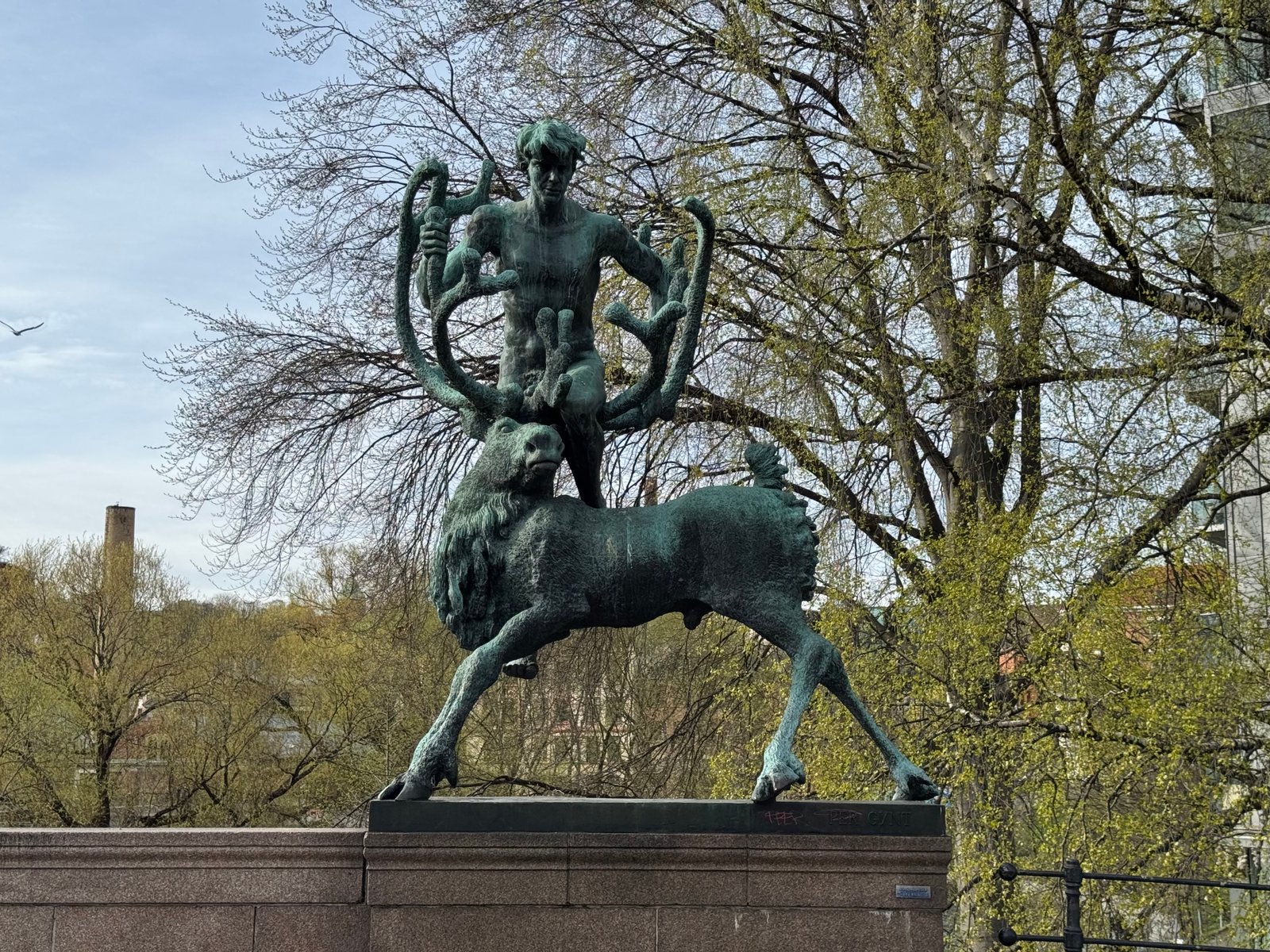
The stretch from southern Grünerløkka (around Anker Hotel / Schous Plass) to north of Nedre Foss Waterfall is the one to walk. If coming from the city centre, walk up Torggata, over Eventybrua (Fairytale Bridge), so called due to its several statues inspired by Norwegian Fairly Tales. This is where you start walking upstream. You'll pass the artsy area around Blå, the trendy Vulkan redevelopment, where you will find Mathallen, Nedre Foss waterfall, and just past Nedre Foss you will find the best coffee shop in Oslo, Tim Wendelboe.
RECOMMENDED: Read our insiders guide to Mathallen
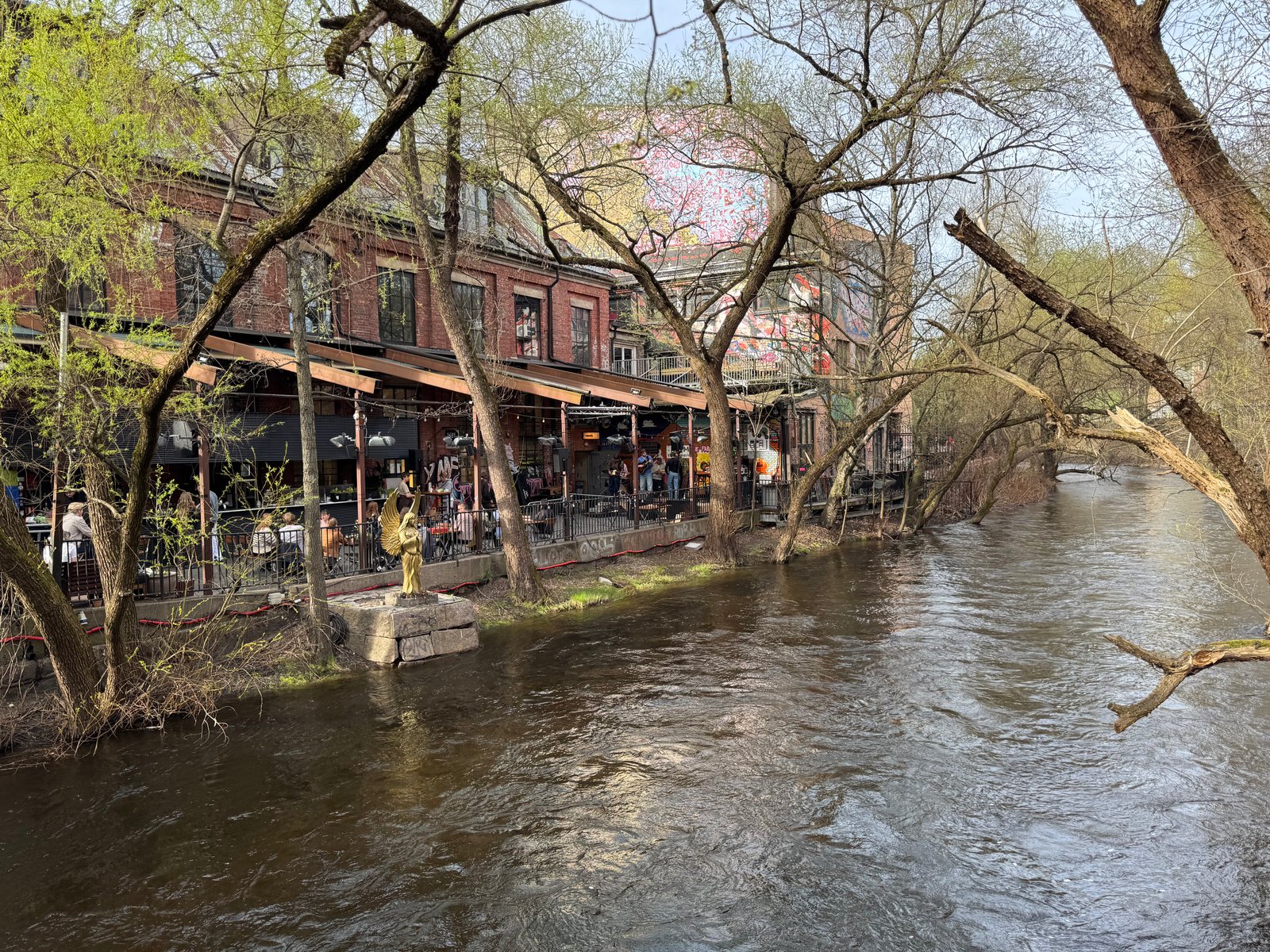
Blå is a concert venue and bar in a former factory right on the riverbank. Most nights it hosts live music, but every Sunday from noon to 5 PM the Sunday market takes over with handmade jewellery, ceramics, knitwear, vintage clothing and local art. It runs year-round.
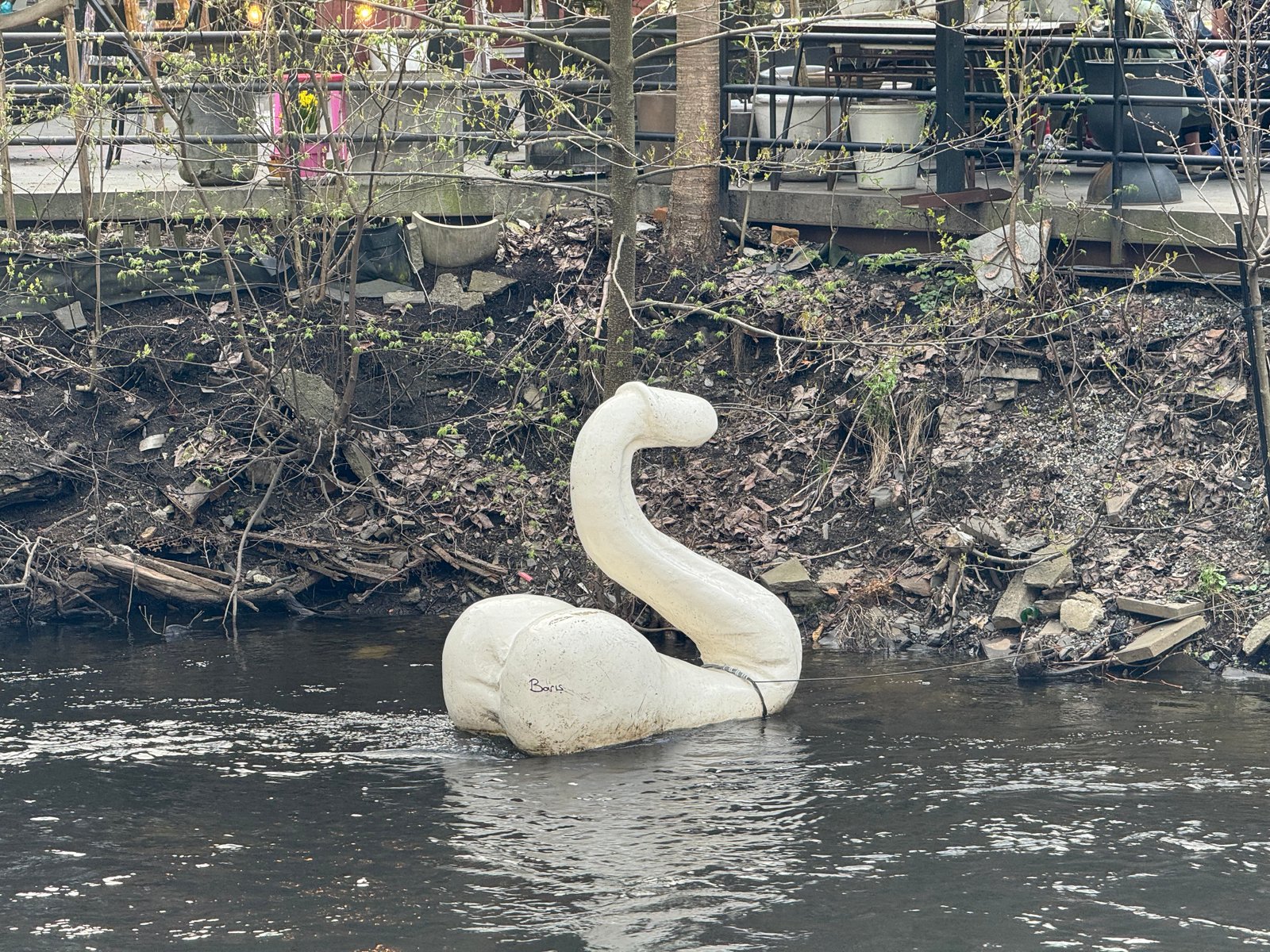
Right before you reach Blå you will stumble upon a curious artwork floating in the river.
Coffee
Tim Wendelboe
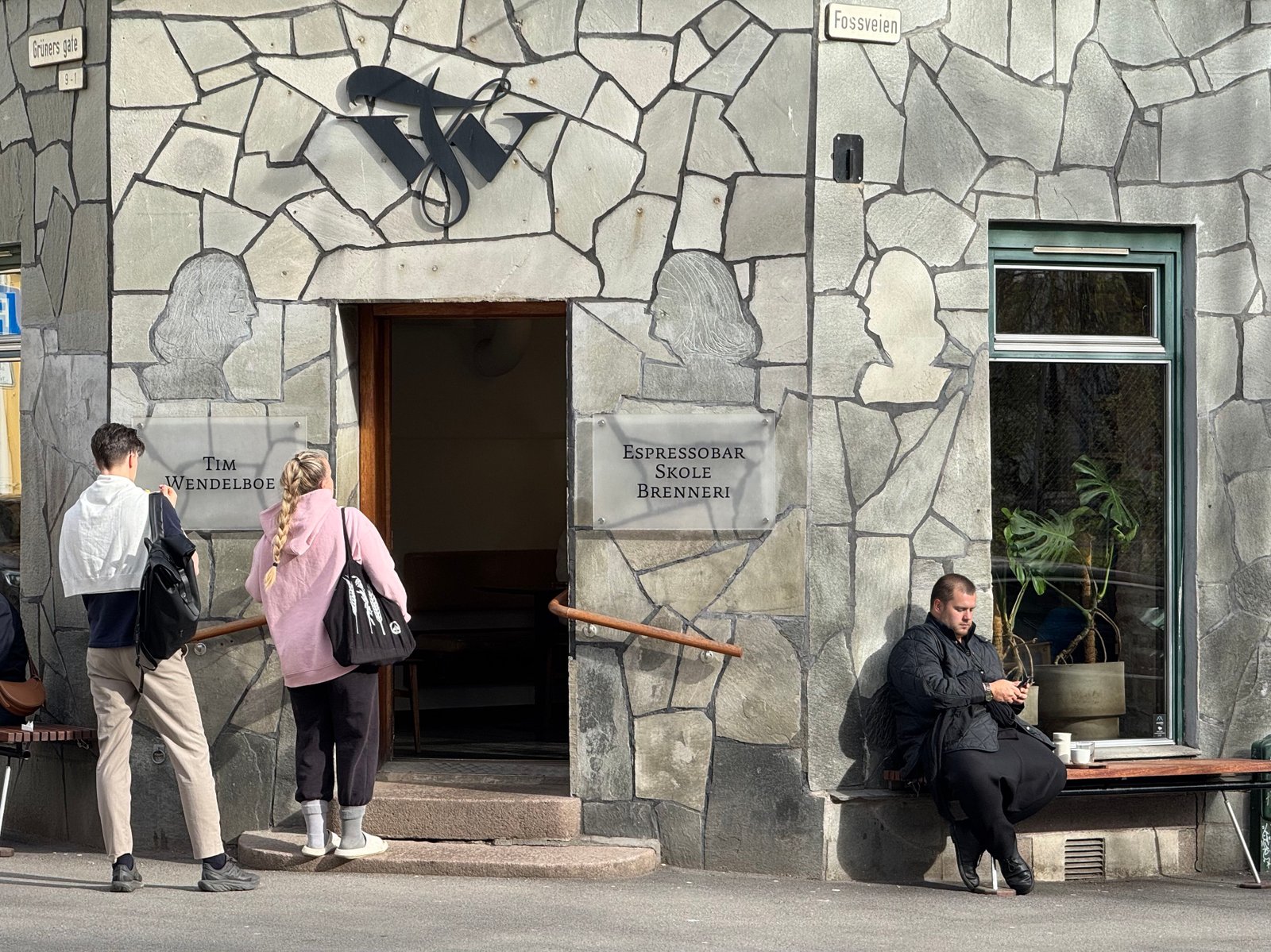
Tim Wendelboe on Grüners gate is the coffee shop that put Oslo on the global coffee map. Tim won the World Barista Championship in 2004, opened this tiny espresso bar and micro-roastery, and became one of the main figures behind the Nordic light roast approach: beans roasted lighter to bring out the character of where they were grown rather than the roast itself. The espresso is bright and clean, with flavour notes that shift through the year as the bean selection changes. They also run an aeropress menu for filter fans, a good way to taste single-origin coffees side by side. Tim also owns a coffee farm in Colombia, and when beans from Finca el Suelo are in stock they're worth trying.
One thing to know: if you're used to dark Italian-style espresso, Nordic light roast can be a shock. It's more acidic, lighter in body, closer to tea than to what most people think of as espresso. Give it a chance anyway. Once you get used to it, dark roast starts tasting like burnt toast.
The space is small and focused entirely on coffee. There's no pastries or food. The staff know what they're pouring and will talk you through the options.
Also, you will get no fruit-bomb natural coffees or funky anaerobic fermented coffees here. Only clean, washed coffees. Tim has been vocal about his dislike for natural coffees. If that is your preference, Supreme Roastworks, a bit further up in Grünerløkka is a better choice.
Some would say (the Norway Insider included) that the Areopress coffees here are somewhat bland and boring. The espressos here are consistently great though, the best in the city.
Supreme Roastworks
Supreme Roastworks on Thorvald Meyers gate has a bigger space and a more relaxed mood. The menu typically runs to eight or nine coffees, roasted in-house, with a lean toward naturally processed beans that tend to produce fruitier, more complex cups. Naturally processed means the coffee cherry is dried whole around the bean, which gives the coffee a heavier, sometimes wine-like character. If they have an Ethiopian natural coffee on the menu, try it.
These are two of the best coffee shops in Oslo, however, Grünerløkka has many more.
Read more in our guide to the best coffee shops in Oslo
Shopping
Markveien runs parallel to Thorvald Meyers gate one block east and is the main shopping street. Grünerløkka has held onto many of its independent shops in a way that most European city districts haven't, and many of them are clustered along this one stretch. The best recommendation is just to walk up Markveien and pop into the stores that interest you.
Frøken Dianas salonger
Frøken Dianas salonger at Markveien 56 sells antique homewares, vintage evening dresses, jewellery and assorted oddities. The space feels more like someone's attic than a shop. They offer tax-free shopping for international visitors.
Kollekted By
Kollekted By, near Schous plass, stocks Scandinavian furniture, textiles, books, kitchenware, lighting and other goods from smaller Norwegian and Nordic makers, selected by the stylist duo Kråkvik & D'Orazio. The selection is small and considered, and it's expensive, but the quality is obvious.
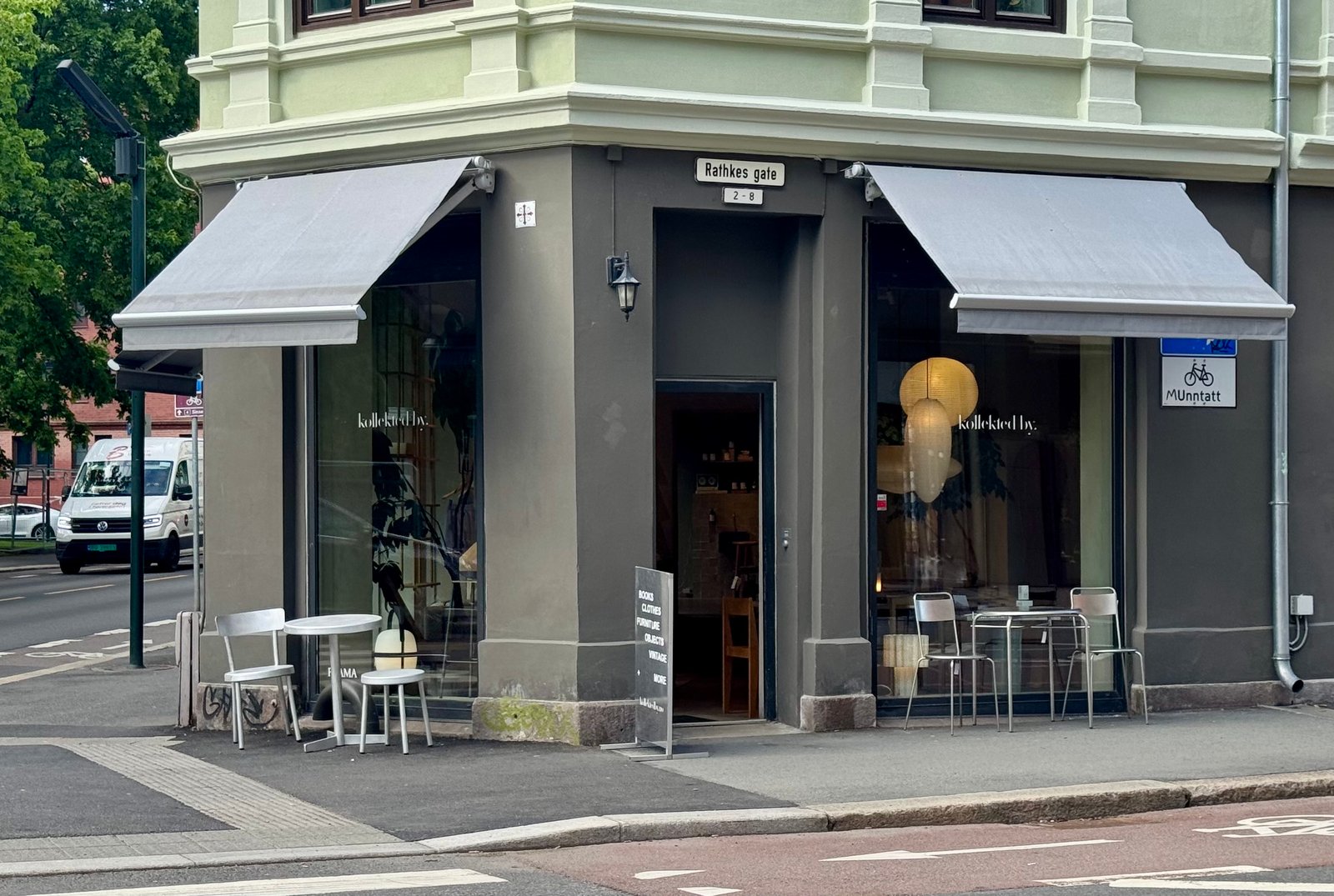
Brudd
Brudd is an artist cooperative staffed by the makers themselves, about 20 of them working in rotation. The ceramics, jewellery and textiles on the shelves are handmade by whoever is behind the counter that day, so you can ask exactly how something was made and why.
For vintage clothing, Velouria Vintage and Robot are both on or near Markveien, and both go for carefully selected retro fashion over the charity-shop jumble.
Where to Eat
Kontrast
Kontrast holds two Michelin stars and a Green Star for sustainability. Chef Mikael Svensson builds the tasting menu around organic and wild Norwegian ingredients, and nothing from the kitchen goes to waste. Book well in advance.
Hot Shop
Hot Shop has one Michelin star and a canteen-style atmosphere in a former sex shop on Københavngata. The surprise tasting menu changes with the season, and the natural wine list leans heavily on Jura producers. Book several months ahead.
Hot Shop is closing down end of 2026 so grab your chance while you still can.
RECOMMENDED: For more on both, read our Oslo restaurant guide
Le Benjamin
Le Benjamin on Søndre gate is a small, family-run French bistro, serving great food at excellent value for Oslo. They also have a Bib Gourmand in the Michelin Guide. Also here you need to book ahead, but a few days usually suffice. There's no point trying to drop in. There are sometimes bar seats for walk-ins, but don't count on it.
The tarte flambée rivals what you'd find in France, and the cheese board is sourced from French producers you're unlikely to encounter anywhere else in Oslo. They run a set menu alongside à la carte.
Apostrophe
Apostrophe sits on Rathkes plass, a quiet square on the eastern edge of the neighbourhood that most visitors walk right past. It's part of the Lofthus Samvirkelag group, serving good pizza and small plates alongside cocktails. The pizzas follow the Lofthus standard, which is high, and the cocktail menu changes with the seasons. The outdoor terrace catches the sun most of the day, making it one of the better lunch spots in the area when the weather is good.
Haralds Vaffel
Haralds Vaffel on Olaf Ryes plass does one thing only; waffles. The waffles are traditional Norwegian: thin, soft and heart-shaped, not the thick Belgian kind. Order the classic with brunost (brown cheese), sour cream and raspberry jam. Brunost is a caramelised whey cheese with a fudge-like sweetness that Norwegians eat at breakfast, on hikes, and apparently on everything. A warm waffle is the best way to eat brunost. The space is tiny, so expect to eat standing or take your waffle out to the square.
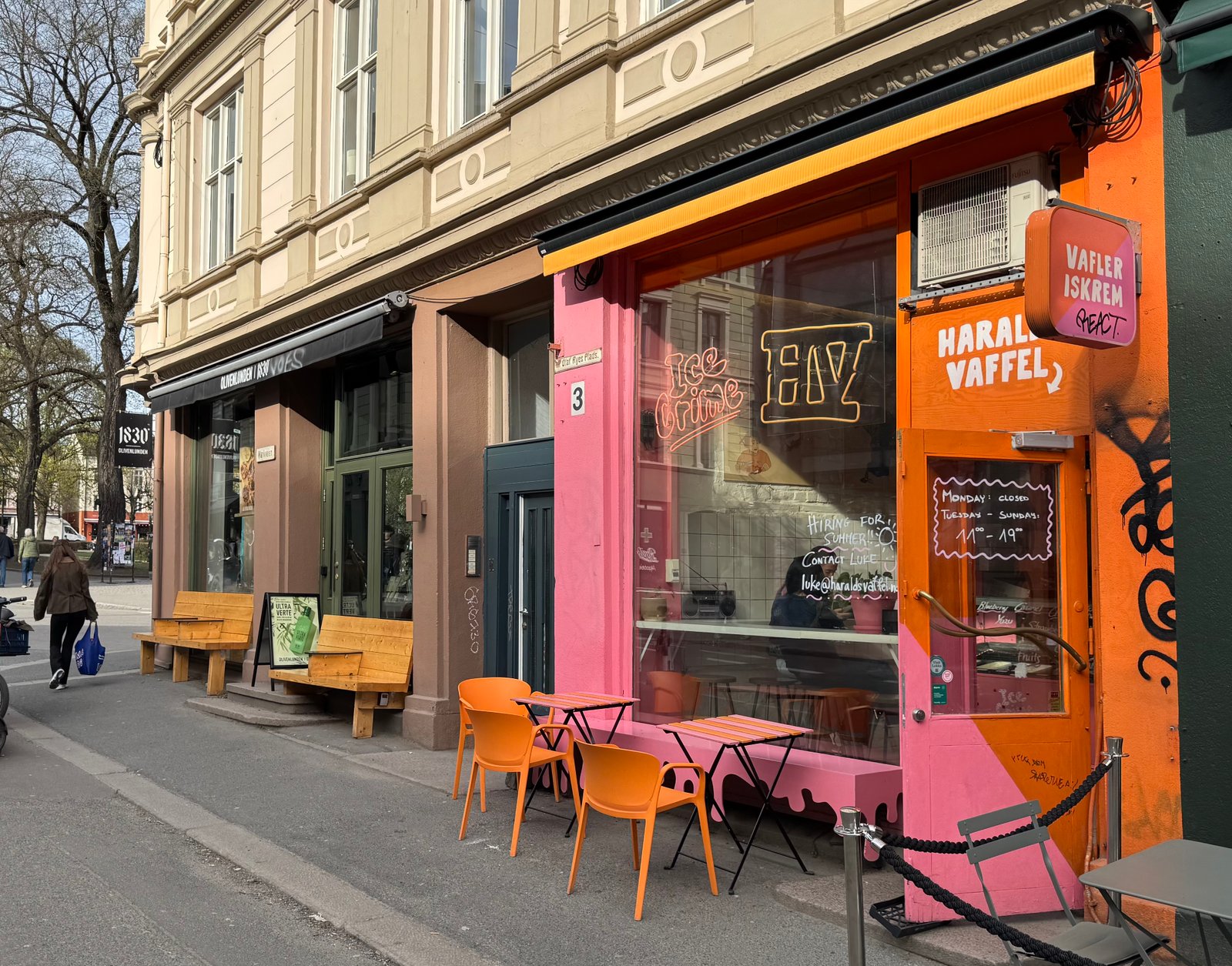
Drinks
Schouskjelleren Mikrobryggeri
Schouskjelleren Mikrobryggeri on Trondheimsveien occupies the original 1842 cellars underneath the old Schous brewery. The entrance is easy to miss: look for the archway into the courtyard at Trondheimsveien 2, look to the right then head down the stairs. The pub has a cellar atmosphere with vaulted brick ceilings, candlelight and a wood-burning fireplace. They brew on-site and pour their own beers alongside guest taps and a long list of bottles from around the world. There's no food, but you're welcome to bring your own from the nearby Schævs Pizza. On colder evenings, grab a seat near the fireplace and order one of the stronger brews. If you only have time for one beer in the neighbourhood, have it down here.
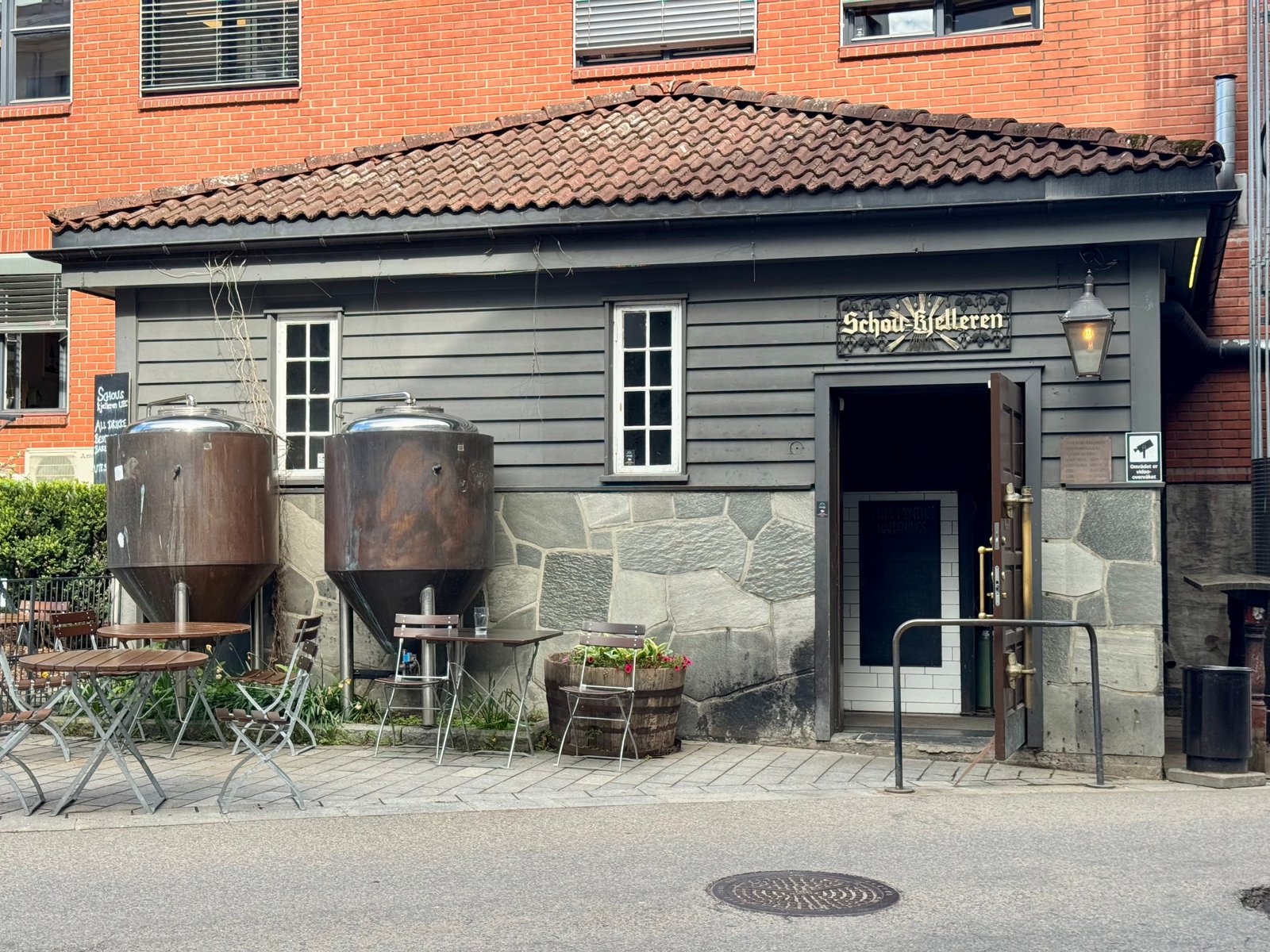
Grünerløkka Brygghus
Grünerløkka Brygghus on Thorvald Meyers gate brews its own beer and pours 15 to 20 of them on tap alongside guest beers and a large bottle selection. The interior is brown pub, dark panelling and chalkboard menus, and the kitchen does pub food: fish and chips, burgers, and bangers and mash.
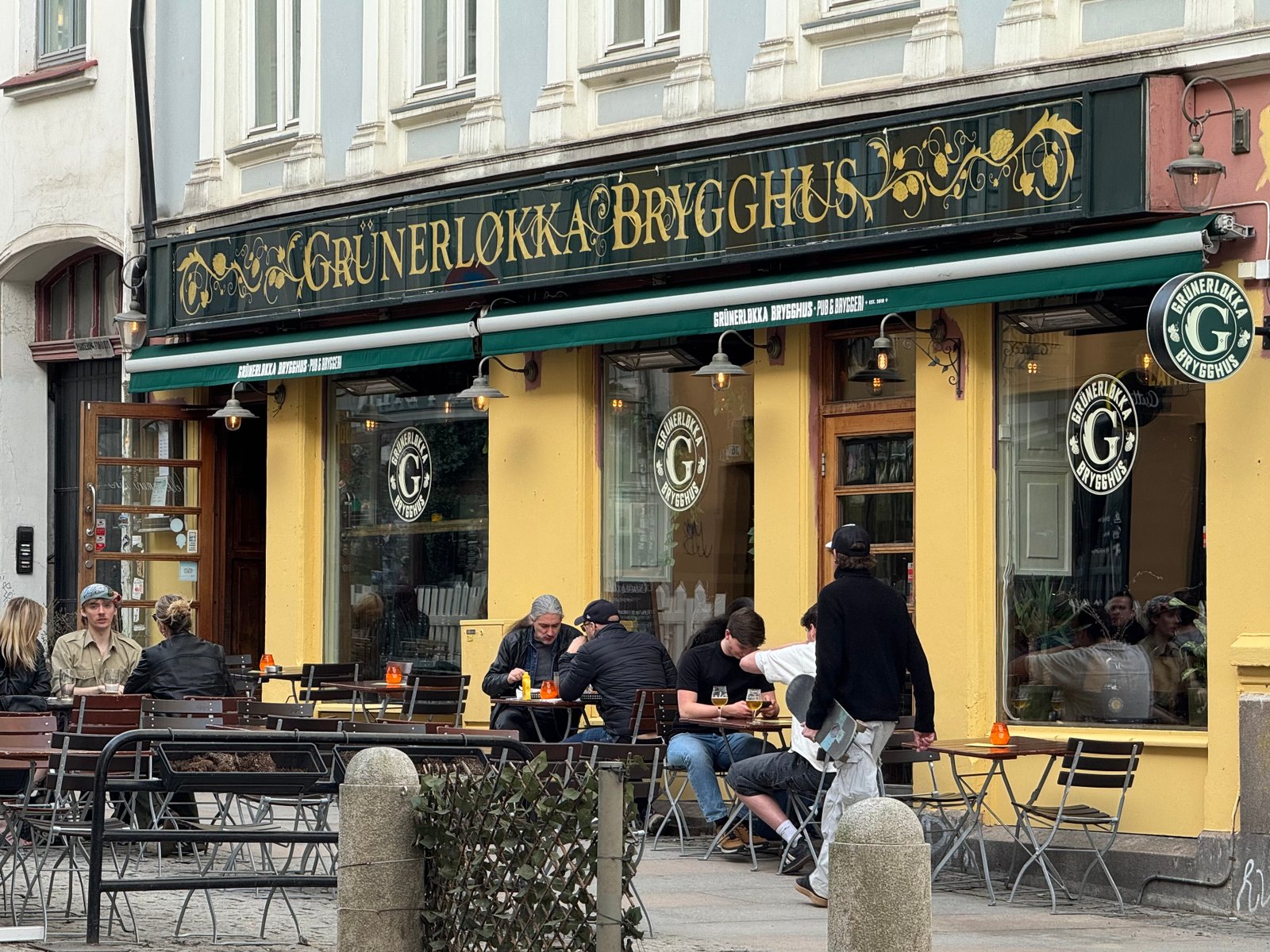
Fat City
Fat City, also on Thorvald Meyers gate, is a natural wine bar with a short list of interesting small producers. The food is simple and designed around the wine: bread with good butter, charcuterie, seasonal small plates that change often. They open for lunch, which is unusual for Oslo wine bars, and the bar seating by the window is a good spot for a solo afternoon glass.
Timing Your Visit
A half-day covers Grünerløkka well. Start mid-morning with coffee at Tim Wendelboe (preferably a weekday, it's very popular), then walk south down Markveien and browse the shops. From the southern end, cut west to the Akerselva and follow the river north toward Vulkan, where Mathallen makes a natural lunch stop.
If you're visiting on a Sunday, start with a coffee at Tim Wendelboe first to beat the biggest crowds, then head to the Sunday Market at Blå from noon.
For dinner, if you haven't booked and want to eat well without a reservation, Grünerløkka Brygghus and the vendors inside Mathallen are reliable walk-in options.
For evening drinks, everything works as a walk-in on most nights. Schouskjelleren gets busy on Friday and Saturday evenings but rarely has a long wait. Fat City is small enough that you may need to hover for a seat, but the turnover is quick.