Last updated
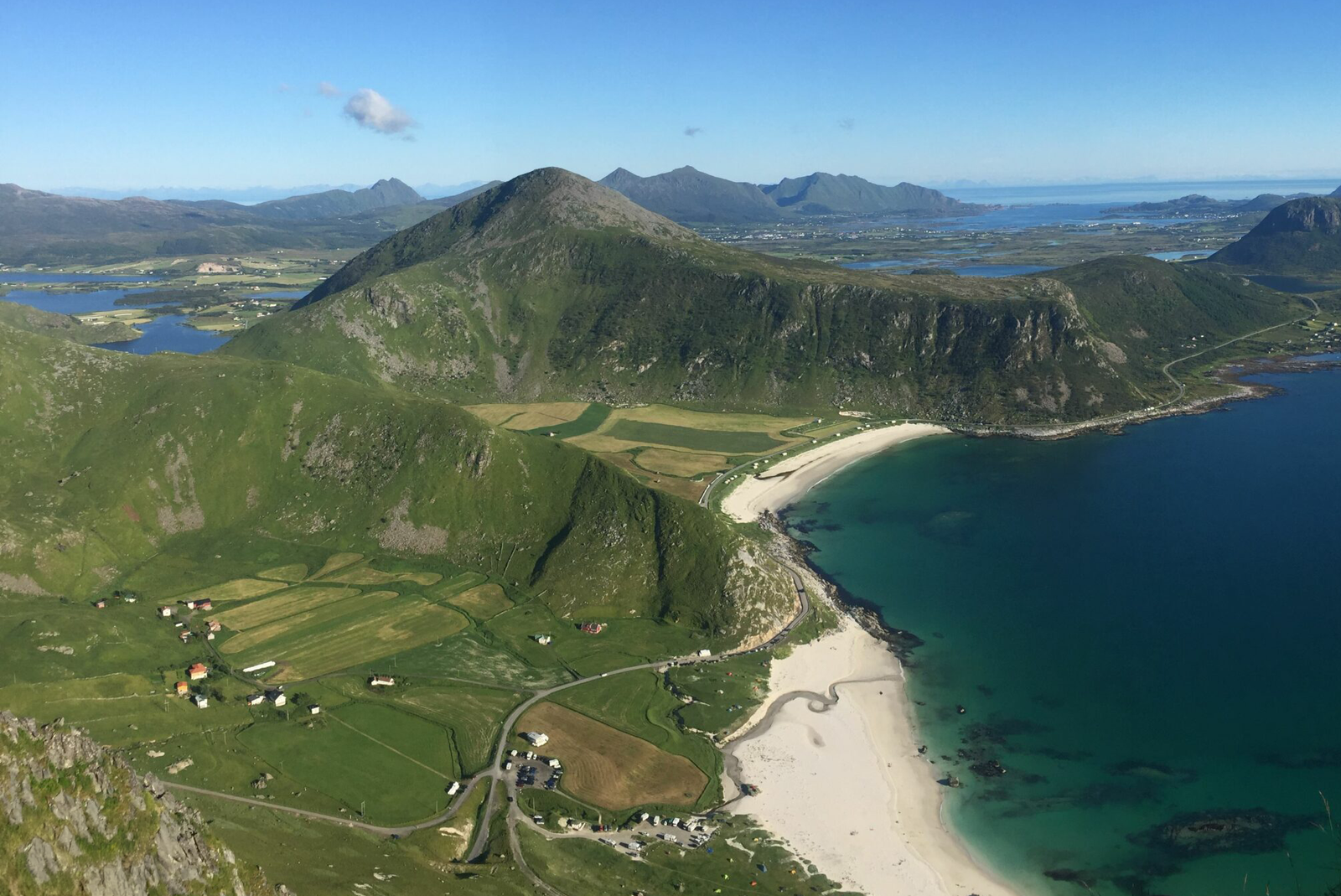
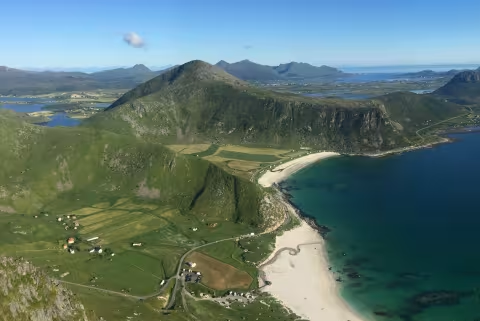
Haukland Beach on Vestvågøy's northern coast looks like it belongs in the Caribbean until the water hits your ankles. White sand, turquoise shallows, granite peaks rising straight out of the shoreline. The average summer sea temperature sits around 11°C, occasionally nudging toward 14 or 15°C on the warmest days in August. The contrast between the colours and the landscape stops you in your tracks regardless.
The beach faces north with a wide open exposure, which makes it a reliable spot for midnight sun viewing in summer and northern lights in winter. In July, the sand fills with people soaking up 24-hour daylight. By September, you might have the whole stretch to yourself. Peak summer brings campervans wedged into every available space, and parking stress. Shoulder season brings wind, solitude, and skies that change every twenty minutes.
There's a proper Beach Café at the parking area, open from June through mid-August with extended hours (typically 9:00 to 21:00 in peak season). Outside summer it runs shorter hours but still opens. Check hauklandbeach.no for current times. The same visitor centre rents kayaks and paddleboards if you want to get on the water without full immersion.
The coastal trail to Uttakleiv
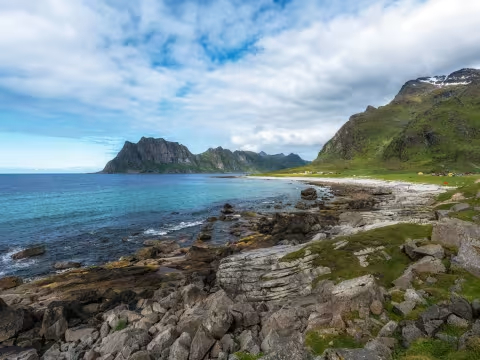
Uttakleiv is a neighbouring beach sits just around the headland, connected by an old coastal road that's flat, wide, and gives you constantly shifting views of the coastline without any real physical effort. Budget 45 minutes to an hour each way. The path wraps around rocky outcrops with the ocean on one side and steep mountain walls on the other. It's suitable for most walkers. Uttakleiv has a different character: darker stones, more dramatic rock formations and fewer people.
The Mannen hike: a 2–3 hours round trip
The trail to Mannen starts right from the Haukland car park and climbs 400 metres up the mountain directly behind the beach. From the ridge you get a full aerial view down to the white sand, the turquoise shallows, and Uttakleiv on the other side. The round trip covers about 3.5 km and takes most people two to three hours depending on pace and how long you linger at the top.
The first section zigzags up grassy terrain that turns to mud after rain. Higher up, the ridge is exposed and narrows in places, enough to make anyone uncomfortable with heights pause and consider turning around. It's not technical climbing, but it's not a boardwalk either. Proper hiking shoes are a necessity. In winter, the official advice from Visit Lofoten is simple: don't go when the path is covered in snow or ice.
Swimming
The water hovers around 11°C on average in summer, reaching 14 or 15°C on the warmest days. Some people paddleboard. A few brave it in wetsuits. Most people wade in up to their knees, take a photo, and retreat to their towel. If you have genuine cold water experience, you'll manage a proper swim. Otherwise, treat this as a beach for walking, sitting, and staring at the water rather than getting in it.
Beating the crowds
July and August are rough for parking. The lot fills early and campervans take up disproportionate space. Arrive early or late. Generally before 9 AM or after 6 PM during peak summer. The light is better at those hours anyway, and the midnight sun means showing up at 8 or 9 PM actually gives you getter light for photography. Fewer people, warmer light, calmer atmosphere.
There's a proper Beach Café at the parking area, open from June through mid-August with extended hours (typically 9:00 to 21:00 in peak season). Outside summer it runs shorter hours but still opens. Check hauklandbeach.no for current times. The same visitor centre rents kayaks and paddleboards if you want to get on the water without full immersion.
May and September are worth considering if your travel dates are flexible. The crowds thin dramatically and the light takes on a lower, more golden quality. The trade-off is colder and more unpredictable weather.
Getting there and parking
Parking requires payment by card or via the machine at the lot. Restrooms and the café are at the parking area. Access to the beach itself is free. The lot holds around 100 cars, which sounds like plenty until you get here at 2 PM on a sunny July afternoon.
You need a rental car. There is technically a bus (line 765 from Leknes), but it runs only a couple of times per day in summer and doesn't operate at all in the off-season. It's not a realistic option for most visitors. The drive from Leknes takes about 10 to 15 minutes on an easy road. From Svolvær or eastern Lofoten, factor in over an hour.
Highlights
Best time to go
Time needed
Getting there
What to do nearby